
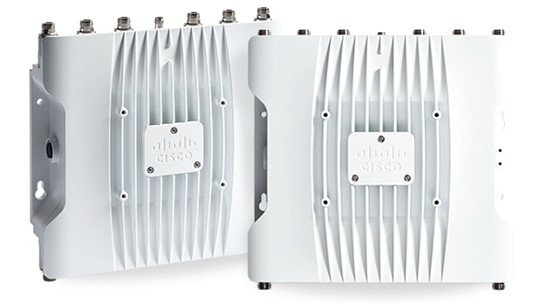
Cisco Catalyst IW9167 Heavy Duty Access Point
Wireless that works wherever you need it
List Price:
Our Price: $3,045.40
List Price:
Our Price: $3,045.40
List Price:
Our Price: $3,045.40
List Price:
Our Price: $3,045.40
List Price:
Our Price: $4,862.02
List Price:
Our Price: $5,414.52
Overview:
The Cisco® Catalyst® IW9167 Series provides reliable wireless connectivity for mission-critical applications in a state-of-the art platform. It can operate in Wi-Fi 6, Workgroup Bridge (WGB), or Ultra-Reliable Wireless Backhaul (URWB) mode.
The Catalyst IW9167 Series addresses the growing need to provide reliable wireless connectivity for mission-critical applications as organizations automate processes and operations. It comes with three 4x4 radios in a heavy-duty design that is IP67 rated and packed with advanced features.
The Catalyst IW9167 Series is designed to take advantage of the 6 GHz band expansion to deliver a network that is more reliable and secure, with higher throughput, more capacity, and less device interference. The 6 GHz band support will be available with a future software upgrade and is subject to approvals and regulations by each countries’ regulatory agencies for the use of the 6 GHz spectrum for outdoor standard power devices. Please refer to the Wi-Fi 6E white paper for more details on 6 GHz.
Cisco Catalyst IW9167E Heavy Duty Access Point
The Catalyst IW9167E is designed with external antenna ports and provides flexibility to choose the right antenna based on the use case. It offers unmatched flexibility, as it can operate in one of three different modes: Wi-Fi 6, WGB, or URWB:
- All the benefits of Wi-Fi 6 in industrial or outdoor spaces: Higher density, higher throughput, more channels, power efficiency, and improved security. ● WGB mode provides an arsenal of features and capabilities to help ensure continuous connectivity for static and mobile industrial applications in a Wi-Fi deployment. ● URWB provides ultra-reliable wireless connectivity for moving assets or to extend the network where running fiber isn’t feasible or is too costly. It provides up to 99.995% availability, <10 ms latency, and zero packet loss with seamless handoffs. URWB is a proven technology that has been used by many customers, operates on unlicensed spectrum, deploys like Wi-Fi, and gives you full control of your network.
Cisco Catalyst IW9167I Heavy Duty Access Point
The Catalyst IW9167I is designed to make wireless deployments simple in outdoor and industrial environments. It is built with a cast-aluminum case that can handle water, dust, and extreme temperatures. It comes with a built-in antenna that enables high-throughput connectivity for high-density Wi-Fi clients.
The IW9167I supports Wi-Fi 6, and it comes with 6-GHz hardware support. That way organizations can deploy Wi-Fi 6E and get up to 1.2 GHz more spectrum to boost capacity and mitigate interference.
Catalyst IW9167E Heavy Duty Access Point for Hazardous Locations
The Catalyst IW9167E-HZ has all the capabilities, benefits, and features of the IW9167E Heavy Duty Access Point with the additional capability to deploy in Hazardous Locations (HAZLOC) around the world. Equipped with hardened ports and certified by UL, ATEX, and IECEx, the Catalyst IW9167E Heavy Duty Access Point for Hazardous Locations brings Wi-Fi 6, Wi-Fi 6E, and URWB into regulated explosive environments for the first time.
Secure infrastructure
Trustworthy systems built with Cisco Trust Anchor Technologies provide a highly secure foundation for Cisco products. With the Cisco Catalyst IW9167E Heavy Duty Access Point, these technologies enable assurance of hardware and software authenticity for supply chain trust and strong defense against man-in-the-middle attacks that compromise software and firmware. Trust Anchor capabilities include:
- Image signing
- Secure Boot
- Cisco Trust Anchor module
Redefine your Wi-Fi experience:
Today's hybrid workplace or tomorrow's ubiquitous connectivity starts with Wi-Fi 6 and Wi-Fi 6E.

Reliability
Connect more devices with improved performance.

Powerful
Support new immersive applications and use cases.

Simple
Operate your network on-premises or in the cloud with Cisco Catalyst Wi-Fi 6E access points.
The Catalyst IW9167E brings unmatched flexibility, as it can operate in one of two reliable wireless technologies: Wi-Fi 6 or Cisco URWB:
- All the benefits of Wi-Fi 6 in industrial or outdoor spaces: Higher density, higher throughput, more channels, power efficiency, and improved security.
- Cisco URWB provides ultra-reliable wireless connectivity for moving assets or to extend the network where running fiber isn’t feasible or is too costly. It provides up to 99.995% availability, less than 10 ms latency, and zero packet loss with seamless handoffs. Cisco URWB is a proven technology that has been used by many customers, operates on unlicensed spectrum, deploys like Wi-Fi, and gives you full control of your network.
One platform, two wireless technologies:
Cisco Ultra-Reliable Wireless Backhaul
Ultra-Reliable Wireless Backhaul technology. Deploy and manage through IoT Operations Dashboard:
- Wireless connectivity to extend your network to mobile or remote locations
- Ultra-reliability with multipath operations
- High-availability, ultra-low latency
- Zero loss with seamless handoffs
- Full control of your network, unlicensed spectrum
- Deployable through Cisco IoT Operations Dashboard
Wi-Fi 6/6E-ready
Wi-Fi 6/6E-ready technology. Manage with Cisco DNA Center:
- Wi-Fi 6 access point for your industrial wireless needs
- High-bandwidth, high density, low-latency, longer battery life, improved security
- Support for workgroup bridge (WGB)
- Wi-Fi 6E-ready (pending regulatory agencies’ usage approvals)
- Management with Cisco DNA Center
Features and Benefits:
| Features | Benefits |
|---|---|
| Wi-Fi 6 (802.11ax)/Wi-Fi 6E-ready | The IEEE 802.11ax standard, also known as High-Efficiency Wireless or Wi-Fi 6, builds on 802.11ac. IW9167 can support up to a 7.8-Gbps PHY data rate with 4x4 MIMO and four spatial streams. Wi-Fi 6E is Wi-Fi 6 “extended” into the 6 GHz frequency band, allowing the use of additional channels. IW9167 is Wi-Fi 6E ready, subject to approvals and regulations for the use of the 6 GHz spectrum by each countries’ regulatory agencies. |
| Flexible multitechnology support | Two different technologies (Wi-Fi and Cisco URWB) provide flexibility to choose a mode based on the use case. Ability to swap images in the field helps change modes between Wi-Fi and Cisco URWB without changing the hardware. |
| Tri-radio architecture | IW9167E
IW9167I
|
| Multigigabit Ethernet | Dual Multigigabit Ethernet supports speeds up to 5 Gbps. |
| Smart AP† ¥ | Smart AP causes the access point to change its power consumption to reflect its current client load. An access point will typically operate on the radios provided to it regardless of how many clients are connected. With Smart AP, if the number of clients is small enough, the access point will automatically reduce the radio stream count, saving power. |
| Band steering¥ † | Enhanced to help clients that are 6 GHz capable to leave the 5 GHz radio and connect to the 6 GHz one. Wi-Fi 6E clients are automatically directed to connect to the 6 GHz radio to take advantage of the benefits that the radio offers and free up the 2.4- and 5 GHz radios for legacy clients. IW9167 is Wi-Fi 6E ready, subject to approvals and regulations for the use of the 6 GHz spectrum by each countries’ regulatory agencies |
| Uplink/downlink OFDMA¥ | Orthogonal Frequency-Division Multiple Access (OFDMA)-based scheduling splits the bandwidth into smaller frequency allocations called Resource Units (RUs), which can be assigned to individual clients in both the downlink and uplink directions to reduce overhead and latency. |
| Uplink/downlink MU‑MIMO technology¥ | Supporting four spatial streams, Multiuser Multiple Input, Multiple Output (MU-MIMO) enables access points to split spatial streams between client devices to maximize throughput. |
| BSS coloring¥ | Spatial reuse (also known as Basic Service Set [BSS] coloring) allows the access points and their clients to differentiate between BSSs, thus permitting more simultaneous transmissions. |
| Target Wake Time¥ | Target Wake Time (TWT) allows the client to stay asleep and to wake up only at prescheduled (target) times to exchange data with the access point. This offers significant energy savings for battery-operated devices, up to three to four times the savings achieved by 802.11n and 802.11ac. |
| Intelligent Capture¥ | Intelligent Capture probes the network and provides Cisco DNA Center with deep analysis. The software can track more than 240 anomalies and instantaneously review all packets on demand, emulating the onsite network administrator. Intelligent Capture allows for more informed decisions on your wireless networks. |
| Bluetooth 5.1 | The integrated Bluetooth Low Energy (BLE) 5 radio enables location-based use cases such as asset tracking, wayfinding, and analytics. |
| Scanning radio | Dedicated radio for monitoring air space to perform advanced RF spectrum analysis and deliver features such as Cisco CleanAir®, Wireless Intrusion Prevention System (wIPS), and Dynamic Frequency Selection (DFS). |
| Container support for applications | Container support enables edge computing capabilities for IoT applications on the host access point. |
| Self-identifying antenna | The access point is able to read information from antennas that support the Self-Identifying Antenna (SIA) feature and automatically populates antenna gain for plug-and-play antenna configuration. |
| GNSS | A built-in GNSS (Global Navigation Satellite System) receiver provides coordinates to track the location of the access point. |
| M12 adapter | M12 adapter accessories give the flexibility to convert Ethernet and power interfaces on the base unit into M12 interfaces while retaining all the certifications. |
| Multipath operations†¢ | Multipath operations (MPO) can enhance reliability by sending duplicate copies of packets across multiple wireless paths. |
| Workgroup bridge (WGB) | Provides wireless connectivity to a lightweight access point infrastructure on behalf of wired clients that are connected via Ethernet behind the WGB access point. |
† Available with a future software upgrade.
¥ Available only in Wi-Fi mode.
¢ Available only in URWB mode.
* 6 GHz subject to approval by country’s regulatory agency.
Prominent feature
Get reliable wireless connectivity for your mission-critical applications
As you automate your processes and operations to increase safety and productivity, you also need to improve your situational awareness to control your systems. Moving assets involved in mission-critical applications, such as Automated Guided Vehicles (AGVs), Autonomous Mobile Robots (AMRs), and teleremote devices, require reliable wireless connectivity. And sometimes you need to extend your network where running fiber isn’t feasible or is too costly.
The Catalyst IW9167E gives you flexibility and reliability so you can extend reliable wireless connectivity to more places and applications, with features such as:
- One hardware device, two modes of operation: Protect your investment and evolve your wireless networks without the added cost of purchasing a new device. Simply update the software to run Wi-Fi 6 or Cisco URWB.
- Multipath operations (MPO): Patented technology that duplicates your high-priority traffic and works alongside hardware failures to increase availability, lower latency, and lower the effects of interference and hardware failures.
- Workgroup bridge (WGB): In workgroup bridge mode, the device associates to another access point as a client and provides a network connection for the equipment connected to its Ethernet port.
- Heavy-duty design: IP67-rated, hardened to withstand shock, vibration, and extreme temperatures. Supports industrial protocols and industrial certifications (e.g. rail - EN50155).
Product Specifications:
| Item | Specification | ||||||||||||||||||||||||||||
|---|---|---|---|---|---|---|---|---|---|---|---|---|---|---|---|---|---|---|---|---|---|---|---|---|---|---|---|---|---|
| Part numbers |
Cisco Catalyst IW9167E Heavy Duty Access Point
Cisco Catalyst IW9167I Heavy Duty Access Point
Catalyst IW9167E Heavy Duty Access Point for Hazardous Locations
Cisco Catalyst IW9167E-STA Access Point (IW9167E AP with IW-ANT-PNL25610-R stadium antenna)
Regulatory domains: (x = regulatory domain) |
||||||||||||||||||||||||||||
| Software |
IW9167E-AP
IW9167E-URWB
IW9167E-WGB
IW9167I-AP
IW9167E-STA
|
||||||||||||||||||||||||||||
| Supported wireless LAN controllers |
|
||||||||||||||||||||||||||||
| 802.11n version 2.0 (and related) capabilities |
|
||||||||||||||||||||||||||||
| 802.11ac |
|
||||||||||||||||||||||||||||
| 802.11ax |
|
||||||||||||||||||||||||||||
| Antennas | IW9167E
|
||||||||||||||||||||||||||||
| Interfaces |
Note: PG 13.5 glands or M12 adapters shall be used with Ethernet and power interfaces to maintain IP67 rating. Note: Catalyst IW9167E-HZ has permanent M25 ports. M12 adapters are not compatible. |
||||||||||||||||||||||||||||
| Dimensions (W x L x H) | IW9167E/IW9167E-HZ
|
||||||||||||||||||||||||||||
| Weight | IW9167E
|
||||||||||||||||||||||||||||
| Input power requirements |
|
||||||||||||||||||||||||||||
| Power draw |
|
||||||||||||||||||||||||||||
| Surge | IW9167E
IW9167I
|
||||||||||||||||||||||||||||
| Environmental | IW9167E
IW9167I
|
||||||||||||||||||||||||||||
| Environmental ratings |
|
||||||||||||||||||||||||||||
| System memory |
|
||||||||||||||||||||||||||||
| Data rates supported |
|
||||||||||||||||||||||||||||
| Frequency band and 20-MHz operating channels |
|
||||||||||||||||||||||||||||
| Maximum number of nonoverlapping channels | 2.4 GHz 802.11b/g:
802.11a:
|
||||||||||||||||||||||||||||
| Wireless communication standards | Radio approvals
|
||||||||||||||||||||||||||||
| Compliance standards | Environmental EN 60529 IP67 UL50E Type 4X IEC 60068-2-1 (Cold) IEC 60068-2-2 (Dry Heat) IEC 60068-2-14 (Change of Temperature) IEC 60068-2-30 (Damp Heat) IEC 60068-2-6 (Vibration) IEC 60068-2-27 (Shock) IEC 60068-2-30 (Humidity) IEC 60068-2-32 (Freefall) IEC 60068-3-3 (Seismic) Electromagnetic compatibility FCC 47 CFR Part 15 Class A EN 55032 Class A VCCI Class A AS/NZ CISPR 32 Class A CISPR 32 Class A ICES 003 Class A CNS13438 Class A EN 300 386 KS C 9832:2019 EN 301 489-1 v2.1.1 EN 301 489-17 v2.1.1 EN 301 489 – 19 EN 55035 CISPR35 KS C 9835:2019 KS X 3124 KS X 3126 IEC/EN 61000-4-2 - Electro Static Discharge IEC/EN 61000-4-3 - Radiated RF Immunity IEC/EN 61000-4-5 - Surge IEC/EN 61000-4-6 - Conducted RF Immunity IEC/EN 61000-4-8 - Power Frequency Magnetic Field IEC 61000-4-9 – Pulsed Magnetic Field IEC 61000-4-11 - AC Voltage Dips IEC 61000-4-18 - Damped Oscillatory Wave EN-61000-4-29 - DC Voltage Dips Safety IEC 62368-1 EN 62368-1 EN 62311 Flammability EN 45545-3 DIN 5510-2 Industrial EN 61000-6-2 - Industrial EN 61000-6-4 - Industrial EN 61000-6-1 - Light Industrial Rail AREMA C&S Manual Section 11.5.1 AAR S9401 Rail - Rolling stock cab, wayside outside EN 50155 Rail - Electronic Equipment on Rolling Stock Class TX (EMC, Environmental) EN 61373 Rail - Environmental EN 50121-4 Rail - Signaling and Telecommunications Apparatus EN 50121-3-2 Rail - Apparatus for Rolling Stock EN 61373 - Shock and Vibration |
Conducted transmit power and receive sensitivity:
| Item | Specification | ||||||
|---|---|---|---|---|---|---|---|
| 2.4 GHz radio | 5 GHz radio | 5/6 GHz radio | |||||
| Spatial streams | Total Tx power (dBm) | Rx sensitivity (dBm) | Total Tx power (dBm) | Rx sensitivity (dBm) | Total Tx power (dBm) | Rx sensitivity (dBm) | |
| 802.11/11b | |||||||
| 1 Mbps | 1 | 30 | -99 | - | - | - | - |
| 11 Mbps | 1 | 30 | -91 | - | - | - | - |
| 802.11a/g | |||||||
| 6 Mbps | 1 | 30 | -94 | 30 | -96 | 23 | -96 |
| 24 Mbps | 1 | 30 | -85 | 30 | -87 | 23 | -86 |
| 54 Mbps | 1 | 27 | -78 | 27 | -80 | 21 | -79 |
| 802.11n HT20 | |||||||
| MCS0 | 1 | 30 | -95 | 30 | -97 | 23 | -94 |
| MCS7 | 1 | 27 | -77 | 25 | -79 | 20 | -79 |
| MCS8 | 2 | 30 | -92 | 30 | -94 | 23 | -89 |
| MCS15 | 2 | 27 | -74 | 25 | -76 | 20 | -76 |
| MCS16 | 3 | 30 | -90 | 30 | -92 | 23 | -89 |
| MCS23 | 3 | 27 | -72 | 25 | -74 | 20 | -74 |
| MCS24 | 4 | 30 | -89 | 30 | -91 | 23 | -88 |
| MCS31 | 4 | 27 | -71 | 25 | -73 | 20 | -73 |
|
802.11n HT40 |
|||||||
|
MCS0 |
1 |
- |
- |
28 |
-94 |
23 |
-92 |
|
MCS7 |
1 |
- |
- |
25 |
-76 |
20 |
-76 |
|
MCS8 |
2 |
- |
- |
28 |
-91 |
23 |
-89 |
|
MCS15 |
2 |
- |
- |
25 |
-73 |
20 |
-73 |
|
MCS16 |
3 |
- |
- |
28 |
-89 |
23 |
-87 |
|
MCS23 |
3 |
- |
- |
25 |
-71 |
20 |
-71 |
|
MCS24 |
4 |
- |
- |
28 |
-88 |
23 |
-86 |
|
MCS31 |
4 |
- |
- |
25 |
-70 |
20 |
-70 |
|
802.11ac VHT20 |
|||||||
|
MCS0 |
1 |
- |
- |
30 |
-97 |
23 |
-94 |
|
MCS8 |
1 |
- |
- |
24 |
-76 |
18 |
-76 |
|
MCS0 |
2 |
- |
- |
30 |
-94 |
23 |
-91 |
|
MCS8 |
2 |
- |
- |
24 |
-73 |
18 |
-73 |
|
MCS0 |
3 |
- |
- |
30 |
-92 |
23 |
-89 |
|
MSC8 |
3 |
- |
- |
24 |
-71 |
18 |
-71 |
|
MCS0 |
4 |
- |
- |
30 |
-91 |
23 |
-88 |
|
MCS8 |
4 |
- |
- |
24 |
-70 |
18 |
-70 |
|
802.11ac VHT40 |
|||||||
|
MCS0 |
1 |
- |
- |
28 |
-94 |
23 |
-92 |
|
MCS9 |
1 |
- |
- |
24 |
-71 |
18 |
-71 |
|
MCS0 |
2 |
- |
- |
28 |
-91 |
23 |
-89 |
|
MCS9 |
2 |
- |
- |
24 |
-68 |
18 |
-68 |
|
MCS0 |
3 |
- |
- |
28 |
-89 |
23 |
-87 |
|
MSC9 |
3 |
- |
- |
24 |
-66 |
18 |
-66 |
|
MCS0 |
4 |
- |
- |
28 |
-88 |
23 |
-86 |
|
MCS9 |
4 |
- |
- |
24 |
-65 |
18 |
-65 |
|
802.11ac VHT80 |
|||||||
|
MCS0 |
1 |
- |
- |
28 |
-91 |
23 |
-89 |
|
MCS9 |
1 |
- |
- |
23 |
-68 |
18 |
-68 |
|
MCS0 |
2 |
- |
- |
28 |
-88 |
23 |
-86 |
|
MCS9 |
2 |
- |
- |
23 |
-65 |
18 |
-65 |
|
MCS0 |
3 |
- |
- |
28 |
-86 |
23 |
-84 |
|
MCS9 |
3 |
- |
- |
23 |
-63 |
18 |
-63 |
|
MCS0 |
4 |
- |
- |
28 |
-85 |
23 |
-83 |
|
MCS9 |
4 |
- |
- |
23 |
-62 |
18 |
-62 |
|
802.11ax HT20 |
|||||||
|
MCS0 |
1 |
30 |
-95 |
30 |
-97 |
23 |
-94 |
|
MCS11 |
1 |
23 |
-65 |
23 |
-67 |
16 |
-68 |
|
MCS0 |
2 |
30 |
-92 |
30 |
-94 |
23 |
-91 |
|
MCS11 |
2 |
23 |
-62 |
23 |
-64 |
16 |
-65 |
|
MCS0 |
3 |
30 |
-90 |
30 |
-92 |
23 |
-89 |
|
MCS11 |
3 |
23 |
-60 |
23 |
-62 |
16 |
-63 |
|
MCS0 |
4 |
30 |
-89 |
30 |
-91 |
23 |
-88 |
|
MCS11 |
4 |
23 |
-59 |
23 |
-61 |
16 |
-62 |
|
802.11ax HE40 |
|||||||
|
MCS0 |
1 |
- |
- |
28 |
-94 |
23 |
-92 |
|
MCS11 |
1 |
- |
- |
23 |
-65 |
16 |
-65 |
|
MCS0 |
2 |
- |
- |
28 |
-91 |
23 |
-89 |
|
MCS11 |
2 |
- |
- |
23 |
-62 |
16 |
-62 |
|
MCS0 |
3 |
- |
- |
28 |
-89 |
23 |
-87 |
|
MSC11 |
3 |
- |
- |
23 |
-60 |
16 |
-60 |
|
MCS0 |
4 |
- |
- |
28 |
-88 |
23 |
-59 |
|
MCS11 |
4 |
- |
- |
23 |
-59 |
16 |
-84 |
|
802.11ax HE80 |
|||||||
|
MCS0 |
1 |
- |
- |
28 |
-91 |
23 |
-89 |
|
MCS11 |
1 |
- |
- |
22 |
-62 |
16 |
-63 |
|
MCS0 |
2 |
- |
- |
28 |
-88 |
23 |
-86 |
|
MCS11 |
2 |
- |
- |
22 |
-59 |
16 |
-60 |
|
MCS0 |
3 |
- |
- |
28 |
-86 |
23 |
-84 |
|
MSC11 |
3 |
- |
- |
22 |
-57 |
16 |
-58 |
|
MCS0 |
4 |
- |
- |
28 |
-85 |
23 |
-83 |
|
MCS11 |
4 |
- |
- |
22 |
-54 |
16 |
-57 |
|
802.11ax HE160 |
|||||||
|
MCS0 |
1 |
- |
- |
- |
- |
23 |
-86 |
|
MCS11 |
1 |
- |
- |
- |
- |
16 |
-59 |
|
MCS0 |
2 |
- |
- |
- |
- |
23 |
-83 |
|
MCS11 |
2 |
- |
- |
- |
- |
16 |
-56 |
|
MCS0 |
3 |
- |
- |
- |
- |
23 |
-81 |
|
MCS11 |
3 |
- |
- |
- |
- |
16 |
-54 |
|
MCS0 |
4 |
- |
- |
- |
- |
23 |
-80 |
|
MCS11 |
4 |
- |
- |
- |
- |
16 |
-53 |
Note: Values in this table assume all four antennas are used. |
Licensing:
Wi-Fi licensing
| Item | Description |
|---|---|
|
IW-DNA-E |
Industrial Wireless Cisco DNA Essentials |
|
IW-DNA-A |
Industrial Wireless Cisco DNA Advantage |
URWB licensing
| Item | Description |
|---|---|
|
IW9167-URWB-NW-E |
IW9167 Cisco URWB Network Essentials |
|
IW9167-URWB-NW-A |
IW9167 Cisco URWB Network Advantage |
|
IW9167-URWB-NW-P |
IW9167 Cisco URWB Network Premier |
|
IOTOD-IW-E |
IoT-OD Essentials for Cisco URWB |
|
IOTOD-IW-A |
IoT-OD Advantage for Cisco URWB |
Warranty information
The Catalyst IW9167 Series comes with a 1-year limited warranty. The warranty includes 10-day advance hardware replacement and ensures that software media are defect-free for 90 days
Smart Account
Creating a Smart Account by using the Cisco Smart Software Manager (SSM) enables you to order devices and licensing packages and also manage your software licenses from a centralized website.
Cisco Capital
Flexible payment solutions to help you achieve your objectives
Capital® makes it easier to get the right technology to achieve your objectives, enable business transformation, and help you stay competitive. We can help you reduce the total cost of ownership, conserve capital, and accelerate growth. In more than 100 countries, our flexible payment solutions can help you acquire hardware, software, services and complementary third-party equipment in easy, predictable payments.
Learn more
Get reliable wireless connectivity for any application, anywhere
Need to connect your mission-critical time-sensitive applications wirelessly with more bandwidth, higher reliability, and seamless handoffs? Take advantage of the 6 GHz band expansion and the flexibility to run one of two wireless technologies (Wi-Fi 6 or Cisco URWB) in a state-of-the-art hardware platform with the Cisco Catalyst IW9167E Heavy Duty Access Point.
Documentation:
Download the Cisco Catalyst IW9167 Heavy Duty Series Access Point (PDF).
Pricing Notes:
- Pricing and product availability subject to change without notice.
List Price:
Our Price: $3,045.40
List Price:
Our Price: $3,045.40
List Price:
Our Price: $3,045.40
List Price:
Our Price: $3,045.40
List Price:
Our Price: $4,862.02
List Price:
Our Price: $5,414.52